
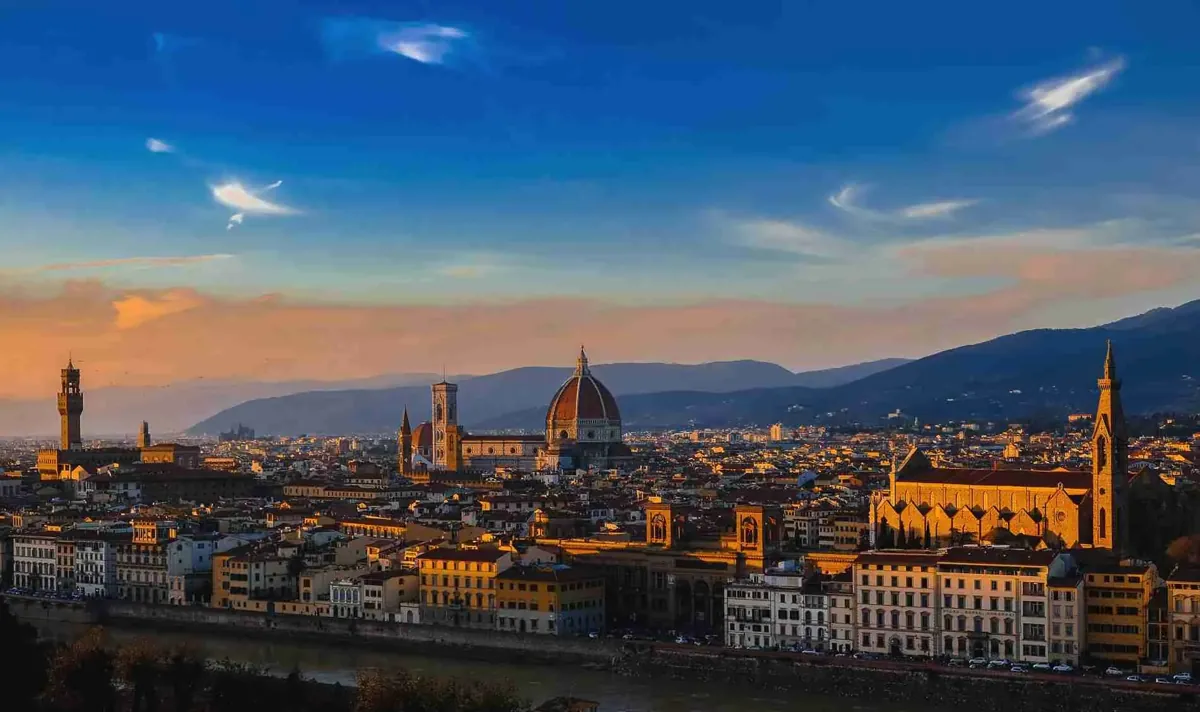
Luxury Shopping & Dining Guide: Florence & Tuscany
Your Florence concierge has one rule for the perfect Italian souvenir: buy it where it is made. In Florence and across Tuscany, that means alabaster carved in Volterra, leather stitched by hand in Santa Croce sull’Arno, and a truffle-laced dinner at a table with a Michelin star. This guide brings together the region’s finest artisan traditions and Florence’s most coveted restaurant tables — a private shopping and dining itinerary, curated the way a five-star concierge would curate it for you.
Why Florence Sets the Standard for Italian Luxury Shopping
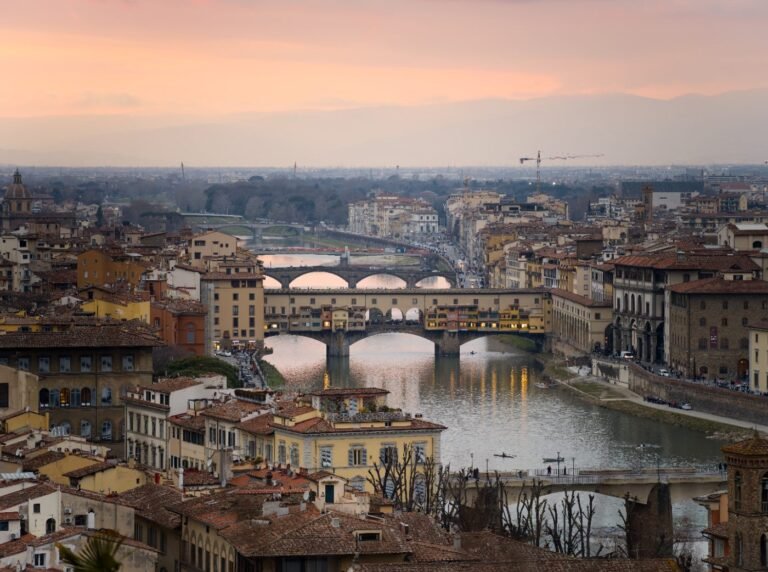
Florence has anchored Italian luxury retail since the Renaissance, when Medici patronage turned goldsmiths, weavers and perfumers into masters of their craft. Via de’ Tornabuoni, the city’s grandest shopping street, has been synonymous with luxury since the 19th century and today houses the ateliers of Italy’s leading fashion houses. A few steps away, the Ponte Vecchio has carried the workshops of Florence’s goldsmiths since the 16th century, when Grand Duke Ferdinando I de’ Medici decreed that only gold and jewelry could be sold on the bridge. The city’s emblem, the red giglio (lily), still appears on rings, charms and crests sold throughout the historic center — a small, wearable piece of Florentine history.
The Tuscan Treasure List: What to Buy in Florence and Tuscany
An essential part of traveling to Tuscany is bringing a piece of it home. Hand-crafted goods here are tied to specific towns, often produced by the same families for generations.
Artisan Craftsmanship
Tuscany’s craft traditions are remarkably varied: alabaster carving in Volterra, hand-forged knives in Scarperia (Mugello), the orange wool panno casentinese from Casentino, artistic glass in Colle Val d’Elsa, and painted ceramics from Montelupo Fiorentino and Impruneta. Florence itself is home to a refined relative of ceramics — porcelain — produced since the 18th century by the Ginori factory in Sesto Fiorentino.
Florentine Leather
Most fine Tuscan leather is produced in the Santa Croce sull’Arno Leather District, between Pisa and Florence, though the finest pieces reach the boutiques of the historic center. The shop inside The Leather School of Florence, tucked behind Santa Croce church, remains one of the most authentic places to watch artisans at work before choosing a bag, belt or wallet of your own.
Fragrance with an 800-Year Pedigree
Some of the world’s most sought-after perfumes and skincare are still made in Florence at the Officina Profumo-Farmaceutica di Santa Maria Novella, Via della Scala 16. Founded by Dominican friars in 1221, it is among the oldest pharmacies in the world, and its frescoed interior is a destination in itself, worth visiting even before a single bottle is chosen.
For the Discerning Foodie
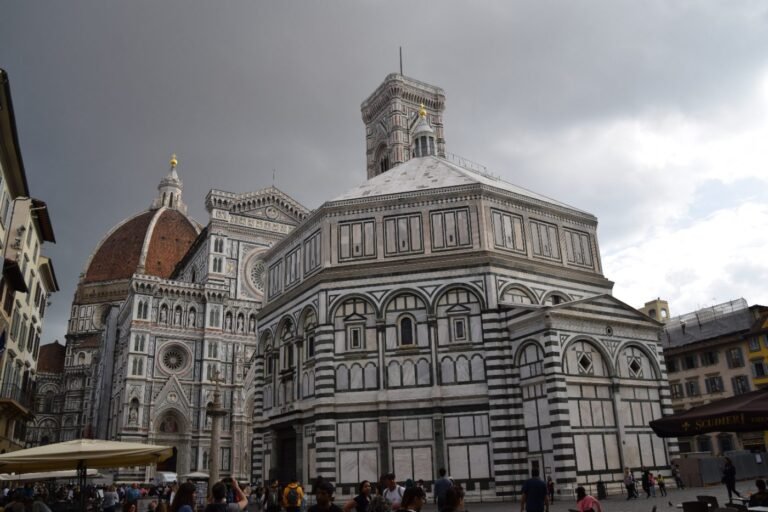
Tuscany’s pantry is as celebrated as its workshops: aged pecorino (the wheel from Pienza is especially prized), finocchiona, lardo di Colonnata, and salame toscano. In Florence, Pegna on Via dello Studio, steps from the Duomo, has gathered fine regional ingredients since 1860; in Lucca, Forme D’Arte on Via San Paolino is the place to taste and buy. Fresh truffles and truffle-based condiments travel from San Miniato in the Pisa province, and a visit to Procacci on Via de’ Tornabuoni — devoted entirely to wine and truffle — is highly recommended; taste before you commit to a jar.
Sweets Worth the Suitcase Space
Panforte and ricciarelli from Siena, buccellato — a sweet bread with anisette and raisins from Lucca (Taddeucci in Piazza San Michele is the address to know) — and cantuccini from Prato, the dry almond biscuits made for dipping in Vin Santo. Lucca’s historic bakery Giusti bakes its own version of the Prato classic; simply mention you are traveling and they will wrap your biscuits for the journey.
The Region’s Legendary Wines
Tuscany produces some of Italy’s most celebrated reds and whites: Chianti, Brunello di Montalcino, Chianti Rufina, Vernaccia di San Gimignano, Morellino di Scansano from the Maremma, and Sassicaia, the original Super Tuscan. Bolgheri is a destination in its own right, its tiny center lined with wine shops and restaurants for tasting. In Florence, Enoteca Alessi — a stone’s throw from the Duomo, family-run since 1952 — stocks more than 2,500 labels, with a particularly strong Tuscan cellar.
Symbols to Bring Home
Beyond the giglio of Florence, look for a carved wooden Pinocchio — the wooden boy created by Florentine author Carlo Collodi in 1883 — made in the tradition of the character’s woodcarver father, Geppetto. And for something to sip rather than wear, the Lucca-only amaros China Massagli and Biadina, produced by macerating herbs, roots and citrus peel, are found at Taddeucci in Piazza San Michele.
Beyond Florence: Artisan Treasures Across Italy
For guests extending their journey beyond Tuscany, each Italian region guards its own specialties.
Venice
Real Venetian souvenirs include Murano glass, delicate Burano lace, and handmade carnival masks. The Fortuny showroom and Rubelli (founded 1858) weave silk and velvet into lamps, cushions and textiles; the Campo San Maurizio flea market (one weekend a month) is the place for vintage glass, and a 15-minute boat ride reaches the Murano furnaces themselves — look for the Artistic Glass Murano® trademark to confirm authenticity. Other Venetian finds worth seeking out: animal-head door knockers from the Valese Foundry, hand-made shoes from Giovanna Zanella near the Rialto Bridge, the striped gondolier uniform from Emilio Ceccato, and a tin of baicoli biscuits for the trip home.
Two further crafts are worth seeking out away from the main tourist calli. Burano lace, needle-worked by hand since the 16th century, is prized enough that the island still maintains a lace museum documenting the tradition; a genuine piece carries a certificate of authenticity, since machine-made imitations are common. Venice is also the historic home of marbled paper (carta marmorizzata), used to bind ledgers for centuries and now sold as stationery, journals and desk accessories by a handful of ateliers near Campo Santo Stefano and San Marco. For a taste to bring home, look for baicoli and other traditional Venetian biscuits, and a bottle of Select or another Venetian aperitivo bitter for recreating a Venetian spritz at home.
Sicily
Palermo’s best shopping neighborhoods are Il Capo, Castellammare and the Vecchio Centro, and the city’s historic markets — Ballarò, Vucciria and the Capo market itself — are as much a sensory attraction as a shopping stop. Look for woven straw coffa bags, hand-painted ceramics from Caltagirone (whose famous Scalinata staircase is tiled in the town’s own maiolica) and Santo Stefano di Camastra, the marranzano (jaw harp) used in tarantella folk music, the traditional coppola cap, and jewelry carved from Etna and Stromboli lava stone or from Lipari’s obsidian. Coral jewelry from Trapani, worked there since the Middle Ages, remains one of the island’s most refined keepsakes.
Sicily’s puppet tradition, the Opera dei Pupi — recognized by UNESCO as an Intangible Cultural Heritage — has left behind a market for hand-carved and hand-painted puppet knights, sold as collector’s pieces in Palermo and Catania workshops. On the edible side, marzipan fruit (frutta martorana, named for the Palermo convent that popularized it) makes an elegant, heat-stable gift, alongside Bronte pistachios, Modica’s cold-processed chocolate, and citrus-based liqueurs and preserves. Marsala remains the region’s most famous fortified wine, though Etna DOC reds and whites and Nero d’Avola have become the more sought-after bottles among collectors today.
Apulia
Refined hand embroidery, rooted in the region’s traditional marriage dowry (corredo matrimoniale), is among Apulia’s most prestigious gifts. Grottaglie, near Taranto, is the region’s ceramic heartland, celebrated for the same whitewashed trulli-inspired motifs that define Alberobello, the UNESCO-listed town of conical stone houses that has become Apulia’s most photographed landmark. In Bari’s old town, women still hand-roll orecchiette pasta on tables set up directly in the street — a demonstration as much as a sale, though bags of the dried pasta travel well.
Extra virgin olive oil is the region’s edible pride — Apulia grows more than 40% of Italy’s supply, much of it from centuries-old groves — and pairs naturally with cheeses such as burrata (native to Andria) and Canestrato Puglia DOP. Terracotta whistles (fischietti) from Rutigliano, crisp taralli crackers, and a bottle built on native Negroamaro or Primitivo grapes — Primitivo di Manduria among the most collectible — round out an edible haul worth the extra suitcase weight.
Marche
Maiolica ceramics from Urbania and Castel Durante, hand-built accordions from Castelfidardo — still home to a dedicated accordion museum — and bobbin lace from Offida (documented since the 15th century) sit alongside Verdicchio wine, Pecorino di Fossa (aged underground for roughly three months) and the white truffle of Acqualagna, second in reputation only to Alba’s. Fabriano has made fine paper since the 1260s using techniques — including the watermark, invented there — that spread across Europe, and remains the region’s paper capital today, its notebooks and stationery sold well beyond Italy.
Marche is also, less famously, one of Italy’s principal footwear-manufacturing regions: the area around Fermo and the Marche coast supplies leather uppers and finished shoes to a number of major Italian luxury houses, making a pair bought locally a genuinely place-specific find. To taste, look for olive all’ascolana — Ascoli Piceno’s fried stuffed olives — and a bottle of Rosso Conero, the region’s most structured red.
Corsica
Just across the water from Tuscany, French Corsica shares more culinary ground with Italy than with mainland France: Brocciu, the island’s whey cheese; wild-boar-crossed pork charcuterie; the herbal liqueur aquavita and myrtle liqueur; and chestnut flour, preserves and even chestnut beer, brewed since 1996 by the Pietra Brewery. The island’s flag, a Moor’s head adopted in 1762 under Pasquale Paoli as a symbol of Corsican independence, appears on souvenirs throughout the island.
Corsica’s maquis scrubland — the wild, fragrant brush covering much of the interior — gives the island its own perfume industry, built on immortelle, myrtle and maquis honey; Miel de Corse carries its own protected designation of origin, with chestnut and maquis varieties the most distinctive. Corsican wine, made mostly around Ajaccio, Patrimonio and Calvi, has its own AOC appellations and is rarely exported, making a bottle sourced locally a genuine rarity. The traditional Corsican vendetta knife, still hand-forged with a hoof- or horn-handle by a small number of island cutlers, is a striking, history-laden keepsake, though travelers should check baggage rules before packing one for the flight home.
Where to Dine Like Florentine Royalty
Most of Florence’s finest tables require reservations well in advance, and several ask for a credit card to hold the booking — always confirm cancellation terms when you book. Our concierge is glad to arrange reservations directly on your behalf.
Michelin-Starred and Fine Dining
- Enoteca Pinchiorri — Via Ghibellina 87. Three Michelin stars, French nouvelle and Tuscan cuisine, an 80,000-bottle cellar. One of Europe’s finest gourmet addresses; closed for lunch, Mondays and Sundays.
- Borgo San Jacopo — inside the Lungarno Hotel on the Arno. One Michelin star, an 800-label wine list; request a table on the balcony overlooking Ponte Vecchio.
- Il Palagio — Borgo Pinti 99, inside Four Seasons Firenze. One Michelin star; Chef Vito Mollica’s contemporary Tuscan cuisine in an intimate, romantic setting.
- Atto di Vito Mollica — Via del Corso 6, inside Palazzo Portinari Salviati. Michelin-recognized, seasonal creative Italian cuisine in an art-filled historic palazzo.
- Cosimo Rooftop Restaurant — atop The Excelsior, a Luxury Collection Hotel, Piazza Ognissanti 3. Modern Tuscan cuisine and signature cocktails with 360° views over the Arno — ideal for sunset aperitivo.
- Ristorante Cestello — Piazza del Cestello 8. Upscale seafood with a traditional Tuscan sensibility in one of the city’s most authentic piazzas.
- Locale — Via delle Seggiole 12. Contemporary fine dining with an elegant aperitivo scene.
- Ora d’Aria — Via dei Georgofili 11/r. Chef Marco Stabile’s contemporary take on Tuscan classics, with an open-plan kitchen.
Traditional Florentine Dining
- Buca Mario — Piazza Ottaviani 16/r. Over a century old; the bistecca alla Fiorentina is the reason to book.
- Buca Lapi — Via del Trebbio 1/r, in the historic cellar of Palazzo Antinori since 1880. Renowned for Florentine steak and artichoke preparations.
- Cibrèo Ristorante — Via Andrea del Verrocchio 5/r. An institution since 1979, refined seasonal Tuscan cooking.
- Fuor d’Acqua — Via Pisana 37/r. Widely considered the city’s finest seafood table, with fish arriving daily from Viareggio.
- La Giostra — Borgo Pinti 12/r, under 16th-century brick arches; a romantic setting for refined Tuscan classics.
- L’Osteria di Giovanni — Via del Moro 22, ten minutes from Via Tornabuoni; try the house zuppa di fagioli.
- Il Latini — Via dei Palchetti 6/r. A lively institution near the Arno, known for communal fiaschi of house wine and hearty Tuscan soups.
- Antico Ristorante Paoli — Via dei Tavolini 12/R, open since 1827 in a neo-Gothic dining room that once drew Puccini and Chaplin.
- Nugolo — Via della Mattonaia 27R, in Sant’Ambrogio. A chic, contemporary Italian kitchen built on seasonal Tuscan ingredients.
- Cantinetta Antinori — Piazza degli Antinori 3, atop Via Tornabuoni. Sample the Antinori family’s own wines with a light lunch of soup, omelette or salad.
- Il Santo Bevitore — Via Santo Spirito 64r, in Oltrarno. Creative reinterpretations of Tuscan classics in a candlelit setting.
- Trattoria 4 Leoni — Via dei Vellutini 1/r, on a quiet piazza with outdoor seating in summer.
- Ristorante Natalino — Borgo degli Albizi 17/r, inside a former deconsecrated church in Santa Croce, its frescoes still intact.
Indian and Kosher Dining
- Indiano Haveli — Viale Fratelli Rosselli 33/r. Traditional Punjabi cuisine with an extensive vegetarian menu and a garden seating over 30 guests.
- Ruth’s Kosher Jewish Restaurant — Via Farini 2/a, beside Florence’s Great Synagogue — the centerpiece of our Jewish Quarter walking tour. Mostly vegetarian, with select fish dishes; closed for lunch on Saturdays.
Want to taste Chianti in person? This popular half-day Chianti countryside excursion with wine tasting is a highly-rated way to experience the wines and vineyards described above.
Frequently Asked Questions
What is the best street for luxury shopping in Florence?
Via de’ Tornabuoni is Florence’s premier luxury shopping street, home to major Italian fashion houses and, at its top, Cantinetta Antinori. Ponte Vecchio remains the address for fine gold and jewelry.
Do Florence’s best restaurants require reservations?
Yes — nearly every restaurant on this list, from Michelin-starred dining rooms to century-old trattorias, recommends or requires a reservation, and several fine-dining tables request a credit card to confirm the booking.
What is the most authentic souvenir to bring home from Florence?
Leather goods from the Santa Croce sull’Arno district, a bottle from a historic Tuscan producer such as Enoteca Alessi, or a fragrance from the 800-year-old Officina Profumo-Farmaceutica di Santa Maria Novella all make distinctive, place-specific gifts.
Can I ship fragile purchases like ceramics or glass home?
Many artisan shops across Tuscany, Sicily and Venice offer shipping for a fee — useful for wine, ceramics and Murano glass, which are difficult to carry as hand luggage.
From a hand-carved boar’s snout to a table at a three-Michelin-star dining room, Florence rewards those who know where to look. Let our concierge team arrange your reservations, introduce you to the ateliers behind these traditions, and weave your own private tailored itinerary of Tuscany’s finest — shopping list included.
Want a guidebook to take with you? This Florence & Tuscany travel guide on Amazon is a handy companion for planning your own route through the city.
As an Amazon Associate I earn from qualifying purchases.
 English
  Italiano
  日本語
日本語  العربية