
A Private Chianti Wine Day from Florence: Antinori, Castles and a Long Lunch
A Private Chianti Wine Day from Florence: Antinori, Castles and a Long Lunch
A private Chianti day from Florence takes seven to eight hours, covers two estates rather than three, and includes a long lunch. The first vineyards begin twenty-five minutes from the city; the good ones are an hour away. What you are paying for is a driver, a curated pair of wineries that have agreed to receive you personally, and permission to drink.
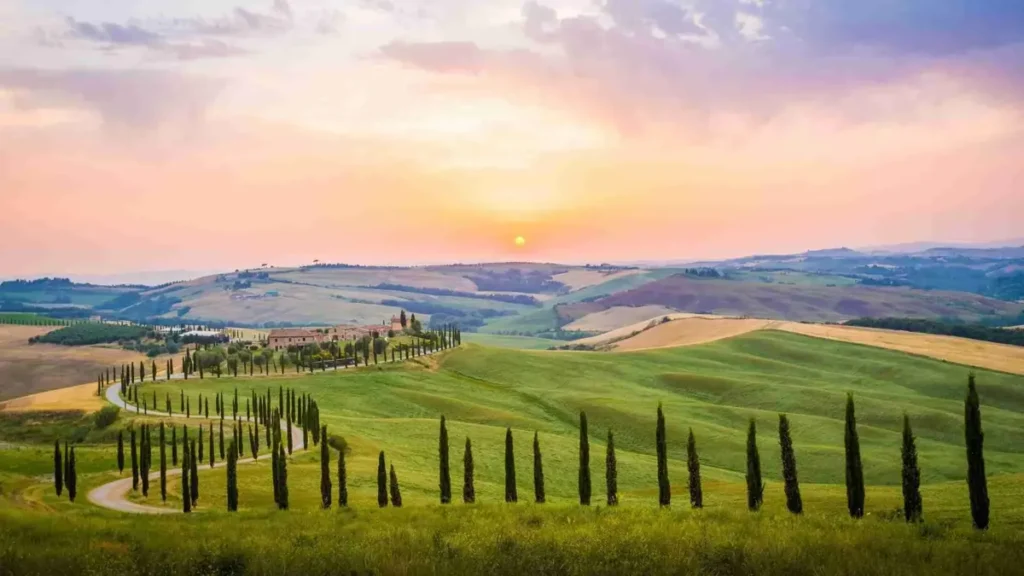
Where Chianti actually is
“Chianti” on a supermarket label covers a large and loosely defined area of Tuscany. Chianti Classico — the one with the black rooster, the Gallo Nero, on the neck of the bottle — is a much smaller zone between Florence and Siena, and it is the one worth driving into. Its wines must be at least 80% Sangiovese and are aged to a defined minimum before release; the Gran Selezione tier sits at the top.
Geographically it means four villages you will hear repeatedly.
| Village | From Florence | Known for |
|---|---|---|
| Greve in Chianti | 40 min | The natural first stop; a triangular market square and a good butcher |
| Panzano | 50 min | The Conca d’Oro amphitheatre of vines; Dario Cecchini’s butcher shop |
| Castellina in Chianti | 1 h | Medieval covered walkway; some of the most serious producers |
| Radda in Chianti | 1 h 10 | Higher, cooler, more elegant wines; the quietest of the four |
Closer to Florence, and technically just outside the Classico heartland, sits Bargino in San Casciano Val di Pesa — twenty-five minutes from the city and the address of the Antinori winery that has become the region’s showpiece.
Antinori nel Chianti Classico: the one everyone asks about
The Antinori family has been making wine since 1385. Their winery at Bargino, opened in 2013, is the opposite of a rustic cellar: a building set into the hillside beneath a terraced vineyard roof, so that from above it barely exists. Inside, a spiral staircase drops through the terracotta-vaulted bottaia and a glass tasting room hangs suspended over the barrels.
The estate runs several formats. The Tinaia tour covers the family history and the winemaking and finishes with three wines. The Bottaia goes deeper — six centuries of the family, four wines, tasted either in the suspended room or in the barrel cellar itself. The CRU experience runs to seven wines with lunch at Rinuccio 1180, the rooftop restaurant looking out over the hills. Private, tailor-made visits are also arranged. Booking is required in every case, and in high season the good slots are gone weeks ahead.
Our honest view: Antinori is spectacular architecture and impeccable hospitality, and it is not an intimate experience. It works best as the first stop of the day, paired with a small family estate in the afternoon where you meet the person whose name is on the label. That contrast is the day.
In short
- Duration: 7–8 hours, door to door from your hotel.
- Estates: two. Three is the classic mistake.
- Driving: 25 minutes to the first vineyards, up to an hour to Radda.
- Best months: late April to June, and September to mid-October. Harvest is roughly the second half of September.
- Included in our quotes: private driver and vehicle, estate visits and tastings booked in your name, lunch reservation. No shared minibus.
What a private day looks like
This is the shape we use most often, adjusted for how much you want to drive and how long you want to sit at the table.
9:30 — collection from your hotel
From the Excelsior, the St. Regis, Four Seasons, Villa Cora or Portrait, a car is at the door. You are in vineyards before ten.
10:15 — first estate
The architectural one. A full tour of the cellar, the history, three to four wines. Ninety minutes to two hours. Morning is deliberate: your palate is clean and the light in the hills is still soft.
12:45 — lunch
Either at the estate itself or at a trattoria in Panzano or Greve. This is not a sandwich stop. A proper Tuscan lunch runs two hours: crostini, a hand-cut pasta, something grilled, pecorino with chestnut honey. If you want the Bistecca alla Fiorentina experience, Panzano is where to have it, and we book it.
15:00 — second estate
The small one. Fifteen hectares, a family name, a cellar you can walk end to end in thirty seconds, and a tasting conducted by the winemaker. Four or five wines including something not sold outside the estate. This is the stop guests remember.
17:00 — the drive back, the long way
Through Panzano’s Conca d’Oro or over the ridge road towards Castellina, with one stop for the view. Back in Florence by six, in time for a shower before dinner.
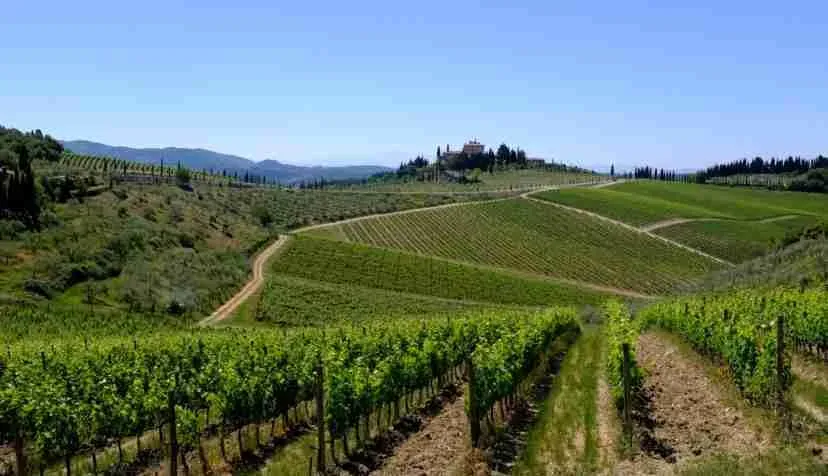
Private driver or rental car?
Three reasons we push guests towards a driver, none of them commercial.
The wine. Italy’s legal blood-alcohol limit for drivers is 0.5 g/l, and zero for licence-holders in their first three years. A serious tasting at two estates puts you over it. Spitting at every pour is possible and joyless.
The roads. The SR222 — the Chiantigiana — is beautiful and narrow, with blind curves, cyclists in packs and tractors in September. The last stretch to many estates is white gravel road, unsigned, and your navigation app will be confident and wrong.
The ZTL. Florence’s limited traffic zone is camera-enforced and fines arrive at your home address months later. Every hotel inside the centre sits within it.
A driver also changes what the day feels like. You get into a car after the second tasting and fall half asleep looking at cypresses, instead of concentrating on a road.
The three mistakes that ruin a Chianti day
Booking three estates. It looks efficient on paper. In practice it turns a day into a schedule: you arrive late at the second, rush the third, and eat lunch standing. Two estates and a long lunch is the correct structure and no guest has ever asked for a third afterwards.
Choosing only famous names. The big estates give a polished tour to twenty people at a time. The small ones give you the winemaker. Do one of each.
Going on a Sunday, or in August. Many family estates close on Sunday and several close for two weeks in mid-August. The hill towns in August are hot and thin. May, June, September and early October are the months.
Tell us how you like to drink and how long you like to sit at a table. We will build the day around it.
Plan your Chianti dayBeyond Chianti: Montalcino and Montepulciano
Guests who already know Chianti often ask about Brunello di Montalcino. It is a genuinely different wine — 100% Sangiovese Grosso, a minimum of five years of ageing before release, structured and long-lived in a way Chianti Classico rarely attempts.
The honest caveat is distance. Montalcino is about an hour and forty minutes from Florence each way, which turns a wine day into a ten-hour commitment. It is worth doing, but as its own day, not squeezed alongside Chianti. The drive through the Val d’Orcia on the way is half the reason to go.
Frequently asked
How long does a Chianti wine tour from Florence take?
Seven to eight hours door to door, typically 9:30 a.m. to 6 p.m. A half-day version of four to five hours with a single estate and no lunch is possible and works well if you have a dinner reservation in the city.
How much does a private Chianti day cost?
It depends on the vehicle, the number of guests and which estates you visit — tasting fees at a small family winery and at a flagship estate differ substantially. Write to us with your dates and party size and you will have a fixed, all-inclusive figure within 24 hours, with nothing to pay on the day.
Can we visit Antinori nel Chianti Classico?
Yes. Visits must be booked in advance and the estate offers several formats, from a three-wine tour to a seven-wine experience with lunch at Rinuccio 1180. In high season the best slots go weeks ahead, so tell us early if this is a priority.
Is it worth going during the harvest?
The vendemmia usually falls in the second half of September and the estates are alive — you can smell fermentation from the courtyard. The trade-off is that the people who would normally show you round are picking grapes, so tours are shorter and less flexible. Early September or the first half of October gives you the atmosphere without the compromise.
We do not drink much. Is the day still worth it?
Yes, and we build it differently: shorter tastings, more time in Greve and Panzano, an olive-oil producer instead of a second cellar, and a longer lunch. Several of our favourite Chianti days involve very little wine.
Can you collect us from a villa outside Florence?
Yes. Collections from villas in Chianti, the Mugello, around Siena and along the coast are routine — tell us the address when you write and it is built into the quote.
Two estates, a long lunch and someone else driving.
Request your itineraryPlan and book
Want everything arranged for you? Tour Florence organizes private tours with guides, drivers and tickets. You can also browse Florence tours and tickets on GetYourGuide, and prepare with Florence and Tuscany travel guides on Amazon.
As an Amazon Associate I earn from qualifying purchases. Some links are affiliate links; they cost you nothing extra.
 English
  Italiano
  日本語
日本語  العربية